
How to Keep a White Saddle Pad Clean (and Actually White)
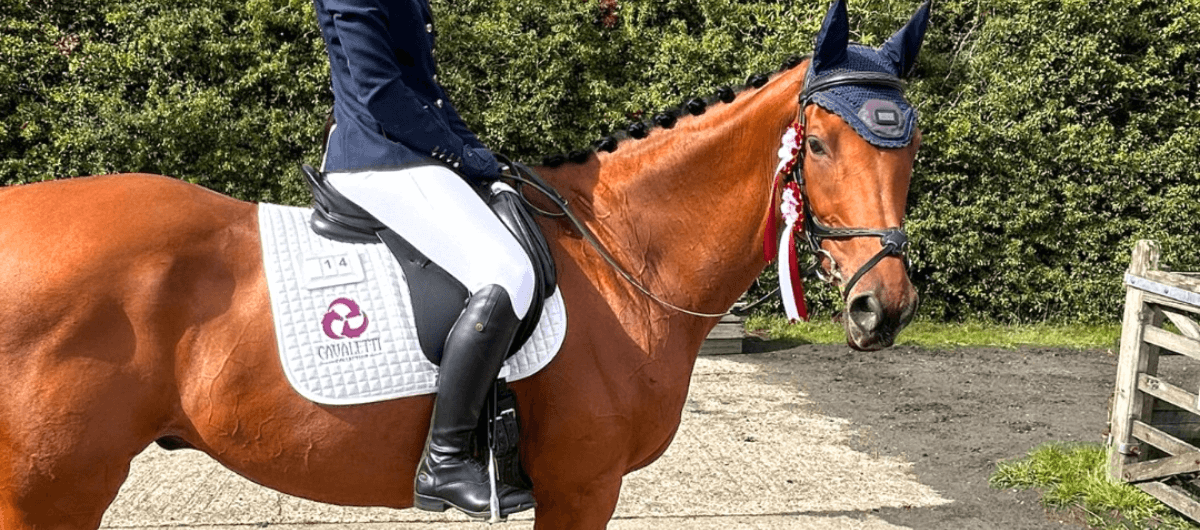
How to Keep a White Saddle Pad Clean (and Actually White)
Table of Contents
- Why White Saddle Pads Go Grey in the First Place
- Before You Even Get to the Washing Machine
- The Washing Routine That Actually Works
- Drying Your Saddle Pad: Where Most People Go Wrong
- Products Worth Keeping in the Tack Room
- How You Store Your Pad Matters Too
- When It's Time to Let Go
- A Final Word
You pull your white saddle pad from the washing machine and hold it up to the light. Still grey. Still patchy. Still looking like it spent six months living in a field — which, fair enough, it basically has.
If this is familiar, you're not alone. White horse pads are one of the most loved and most cursed items in any tack room. They look beautiful on a clean, clipped horse. They also seem to absorb every shade of sweat, mud, and stable stain known to equine kind.
The good news? Keeping them genuinely white is doable. It just takes the right routine — not hours of scrubbing.
Why White Saddle Pads Go Grey in the First Place
It's not just mud. Sweat is the bigger culprit. Horse sweat contains salts and proteins that bind to fabric fibres, and once they're set in, a standard 40-degree wash won't shift them.
Saddle leather dye transfer is another one. Over time, the oils and dyes from your saddle leach into the pad, especially around the panels. It builds up gradually, so you don't notice until the pad looks more stone-coloured than snow-coloured.
Finally, many riders simply wash too cool, too infrequently, or with a detergent that isn't designed for equestrian fabrics. The result is a pad that feels clean but looks dingy.
Before You Even Get to the Washing Machine
A quick pre-treatment makes a real difference. Do this after every ride:
- Brush off dried mud and hair with a stiff-bristled brush or rubber curry comb
- Rinse any heavily soiled areas under cold water before washing (hot water sets protein stains)
- For stubborn sweat marks, rub a small amount of white non-bio washing paste directly onto the area and leave for 20 minutes before washing
It sounds like a lot, but it genuinely takes two minutes and keeps the pad in much better shape over time.
The Washing Routine That Actually Works
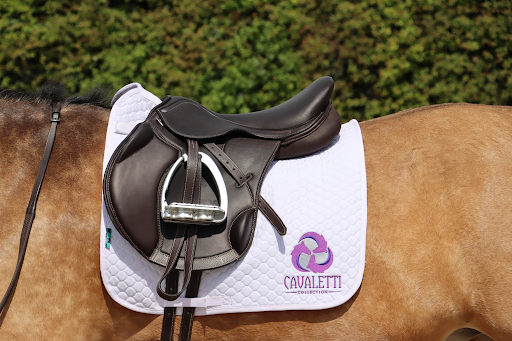 Once you have the pre-treatment down, here is the routine that keeps a white saddle pad looking its best:
- Check the care label first
This sounds obvious, but many riders skip it. Cotton pads can handle a hotter wash. Fleece and synthetic pads often can't. Using too high a temperature on the wrong fabric will shrink the pad or cause pilling.
- Wash at 40 degrees with a specialist detergent
Standard household detergents can leave residues that irritate sensitive skin, including your horse's. Look for a non-bio equestrian detergent, or a sensitive non-bio designed for sportswear. Avoid fabric conditioner on any pad that sits against your horse's back — it can reduce breathability and cause rubbing.
- Add a laundry whitener, not bleach
Bleach will weaken the fibres of your horse saddle pad and can damage any embroidery or binding. Instead, use a laundry whitener or oxygen-based booster (look for products containing sodium percarbonate). These brighten without stripping the fabric.
- Wash pads separately, or only with similar colours
Washing a white pad with dark numnahs or brushing boots is asking for trouble. Keep whites together, or wash alone.
- Do not overload the machine
A single thick horse pad takes up a lot of drum space. Overcrowding stops the pad from rinsing properly, which leaves detergent residue — one of the main reasons white pads go yellow over time.
Drying Your Saddle Pad: Where Most People Go Wrong
The dryer is convenient. It is also one of the fastest ways to yellow a white pad.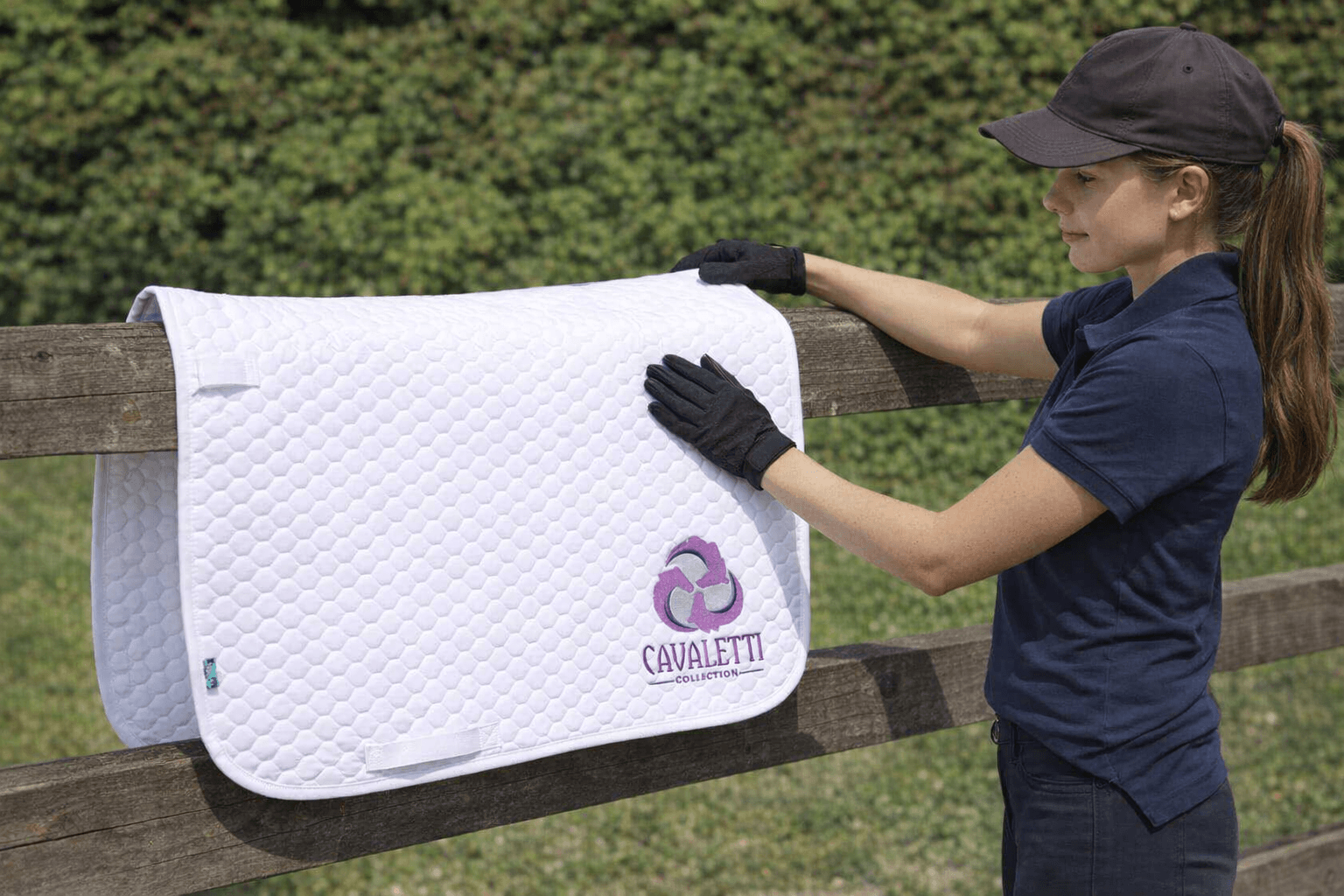
High heat breaks down the brightening agents in the fabric and can set any stains that weren't fully removed in the wash. If you must use a tumble dryer, use a low heat setting and remove the pad while it is still slightly damp.
Ideally, dry flat or over a clean fence rail in natural daylight. Sunlight is a natural whitener, and it works. A couple of hours outside on a bright day does more for a dingy white pad than most commercial products.
Avoid drying directly on a radiator. The uneven heat creates patchy drying and can distort the shape of shaped or contoured pads.
Products Worth Keeping in the Tack Room
You don't need a cupboard full of specialist products. These are the ones that earn their place:
- Oxygen-based laundry whitener (such as Vanish Oxi Action or own-brand alternatives) — add to the drum, not the detergent drawer
- Non-bio equestrian detergent — gentler on fabric and kind to sensitive horses
- White wine vinegar — half a cup in the rinse cycle helps remove detergent build-up and keeps the fabric soft without conditioner
- A stiff brush — for dry mud and hair removal before washing
That's genuinely all you need. The routine matters more than the products.
How You Store Your Pad Matters Too
Clean pads stored badly go yellow faster than you'd expect. A few simple habits help:
- Store clean pads in a breathable bag or on a clean saddle rack — not folded in a plastic crate where moisture can't escape
- Never store a damp pad. This causes mildew and yellow patches that are almost impossible to shift
- Keep white saddle pads for horses away from leather products in storage — the oils continue to transfer even when not in use
When It's Time to Let Go
A well-cared-for quality white saddle pad should stay looking presentable for a long time. But there comes a point where no amount of washing will bring it back — and a sad, grey, compacted pad is not doing your horse's back any favours either.
Here are signs it's time to replace rather than rescue:
- The padding has compressed and no longer springs back when pressed
- There are permanent brown or yellow stains that survive multiple washes
- The binding is fraying or pulling away from the edges
- The pad has lost its shape and no longer sits evenly under the saddle
Replacing a worn pad isn't an indulgence. A pad that sits unevenly or has lost its cushioning can affect how your saddle sits and put pressure on your horse's back.
If you've been thinking about your overall tack setup, it's also worth taking a look at our full guide to saddle pads for horses and ponies — it covers everything from sizing and shape to materials and fit.
A Final Word
Keeping a white numnah genuinely white comes down to three things: act fast after every ride, wash correctly, and dry in daylight when you can. Nothing complicated.
The kindest thing you can do for your horse is make sure the pad sitting against their back is clean, well-maintained, and still doing its job properly. A grey pad that's seen better days is easy to overlook — but your horse will notice.
Ready to browse?
Take a look at our saddle pads to find the right fit for your horse. While you're there, you're welcome to browse the full saddle range too.
Not sure where to start? Find a saddle fitter near you, or if you're considering a new saddle, our 14-day free trial means you can take the pressure out of choosing entirely.
-
When Should a Horse Move Into a Double Bridle?
 April 29, 2026
 -
Brown Leather Bridles: Which Disciplines Suit Them Best?
 April 27, 2026
 -
How to Fit a Flash Noseband: The Welfare Checklist
 April 24, 2026
 -
Bridles, Nosebands and Bits: A Practical Guide for UK Riders
 April 22, 2026
 -
What to Look for in a Jump Saddle Pad
 April 21, 2026